Why Your Soy Candle Looks 'Frosted' — And What Real Makers Know About It
Share
You unwrap a fresh soy candle, set it on the counter under good light, and notice a thin white dusting along the surface or creeping up the inside wall of the jar. Your first thought is the wrong one: dust, mold, a bad batch, something gone off in the wax.
It’s none of those. That powdery bloom has a name in the candle-making world — frosting — and once you understand what’s actually happening in the jar, you’ll start to see it the way artisan makers do: not as a flaw, but as a fingerprint of real soy wax doing what it’s supposed to do.
What Frosting Actually Is
Soy wax is a vegetable wax. Like most things grown rather than refined, it doesn’t behave with perfect uniformity. As the wax cools after pouring, the molecules try to organize themselves into a crystalline structure. Over time — sometimes hours, sometimes weeks — those crystals continue to slowly rearrange themselves on the surface of the candle.
Frosting is what we see when this crystallization climbs to the visible top layer or the side of a clear jar. The bloom is the wax telling you, “I’m not a refined chemical compound. I’m a natural product still settling into my final shape.”
This is fundamentally different from anything wrong with the candle. The wax is still pure, the scent is still locked in, the burn will still be clean. The look is just the cost of using a real vegetable wax instead of a synthetic one.
Why It Happens
A few specific things trigger or accelerate frosting:
- Temperature swings. A candle that sits in a warm kitchen during the day and a cool room at night will frost faster. The wax expands and contracts microscopically with each swing, and each cycle nudges more crystals to the surface.
- Pouring temperature. When a maker pours wax that’s slightly too hot or too cold for the specific soy blend, the cooling curve doesn’t form a tight, uniform structure. The looser structure is more prone to recrystallizing visibly.
- Mold release agents and additives. Pure 100% soy with no additives frosts the most readily. Blends that include small amounts of coconut wax, beeswax, or stabilizers (sometimes labeled “soy blend”) often frost less — but that’s a tradeoff some makers refuse to take, because additives can dampen scent throw.
- Age. A candle that’s been on a shelf for six months has had time to develop more visible bloom than one poured last week. This is one reason small-batch makers like us pour to demand rather than building a giant stockpile.
- Sunlight and warm shelves. Direct sun or a warm windowsill speeds the cycle dramatically.
Why It’s Not a Defect
This is the part customers often need permission to believe.
Frosting is so closely associated with pure soy that mass-market candle factories deliberately add chemicals to suppress it — sometimes at the expense of the wax’s natural behavior, fragrance retention, and clean burn. If you’ve ever held a candle from a big-box brand and noticed it looks perfectly glossy and uniform forever, that’s usually a tip-off that you’re holding a heavily blended or additive-stabilized wax.
Independent artisan makers face a choice every time we formulate: a slightly more “imperfect” looking jar that burns cleaner and throws fragrance better, or a flawless aesthetic that costs you on performance. Most of us choose performance. Frosting is the visible price of that decision.
So when you see a faint white veil on a fresh soy candle, you’re actually looking at a small quality signal — proof that the maker didn’t trade purity for cosmetics.
How to Minimize It (For DIY Makers)
If you’re pouring your own candles and want to dial down visible frosting without compromising the wax, a handful of techniques actually help:
- Pour at the right temperature for your specific wax. Every soy wax has a recommended pour temperature — usually printed on the bag or on the manufacturer’s spec sheet. A candy thermometer is one of the best ten-dollar investments a beginner can make. Pour too hot and you’ll get frosting along the sides; too cool and you’ll get rough tops and adhesion issues.
- Cure in a stable environment. Let freshly poured candles cool slowly in a room that doesn’t swing more than a few degrees over twenty-four hours. A closed cabinet works. A drafty garage doesn’t.
- Pre-heat your jars. A jar that’s room-temperature at pour time creates an immediate cooling shock at the glass-wax interface — exactly where frosting tends to start. A short warm-up with a hairdryer or low-temperature oven evens out the cooling curve.
- Cure long enough. Soy candles benefit from a full two-week cure before testing or selling. The chemistry actually keeps moving during that window, and frosting that’s going to appear will usually do so within the first ten to fourteen days. Let it happen on your bench, not on a customer’s shelf.
- Use a wax designed for low frosting if it matters more than scent throw. Some commercial soy waxes (golden brands, blends) are formulated specifically for cosmetic stability. They’re a legitimate choice for makers selling on aesthetics, just know the tradeoff.
A Note for Customers
If you bought a candle from a small maker and you see frosting, don’t return it. It’s not a flaw and it won’t change anything about how the candle smells or burns. The first time you light it, the surface melts smooth and the bloom disappears entirely. Many of our customers actually grow to like the patina — it’s a quiet reminder that what they’re burning came from a small pour, not a factory.
Quick Takeaways
- Frosting is a natural, harmless recrystallization on the surface of pure soy wax.
- It’s not mold, dust, or a defect. The candle still smells, burns, and performs perfectly.
- Triggers: temperature swings, pour temperature mismatches, age, sunlight.
- Mass-market candles often look “perfect” because they use chemical additives to suppress it.
- DIY fix: right pour temp, pre-heated jars, stable cure environment, two-week cure.
- When you light the candle, the frosted layer melts smooth and vanishes.
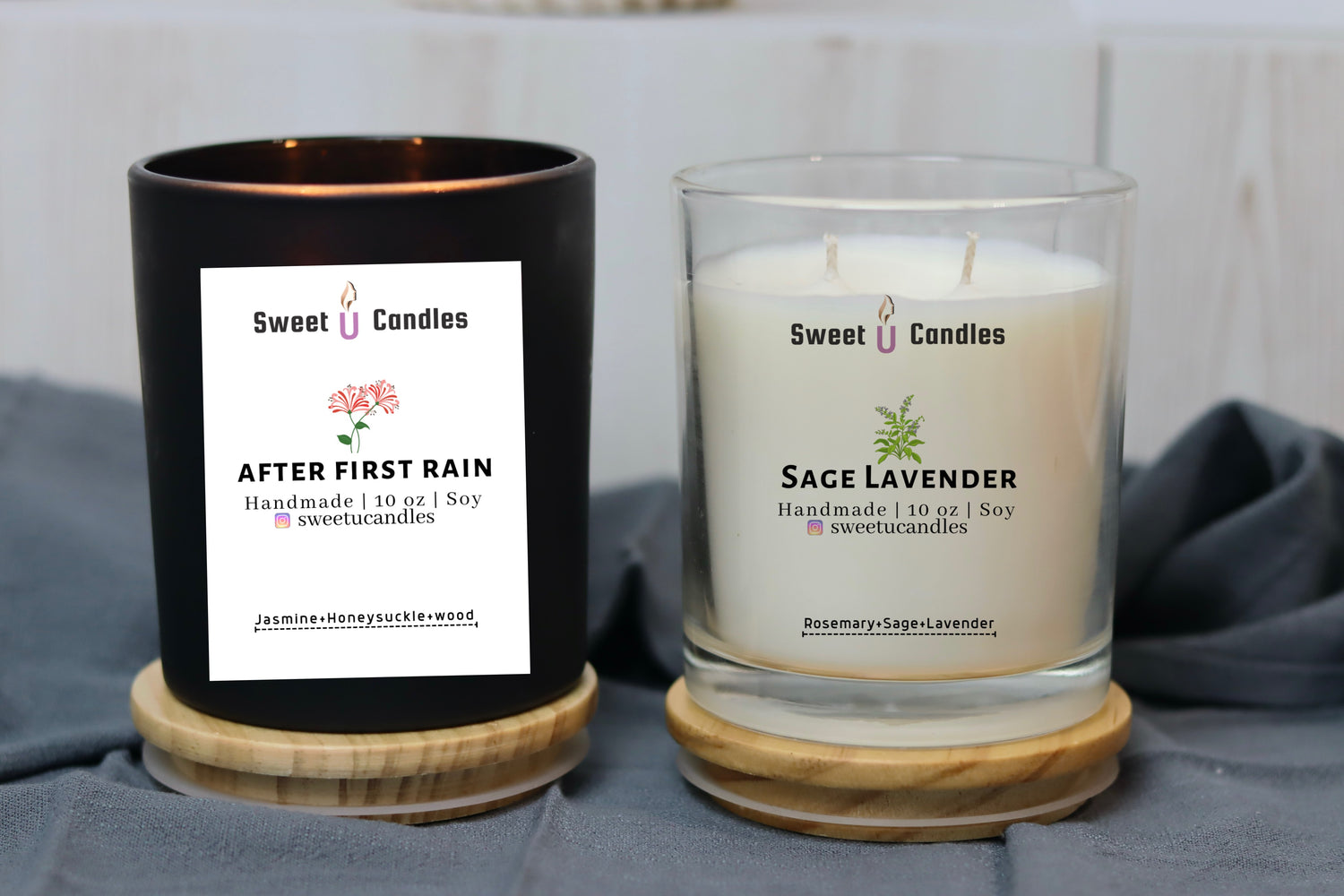
Every batch of our Sweet U Candles — whether it’s Old Library, Oakmoss Amber, or Egyptian Amber — is poured from pure soy with no cosmetic additives, which means a little frosting now and then is part of the deal. We think it’s a fair trade for the cleaner burn and stronger scent. We hope, now that you know what’s going on inside the wax, you’ll think so too.